By mid-week, ballots for the November 3 General Election are expected to arrive at the homes of about 96,000 Camden County residents who are registered to vote by mail.
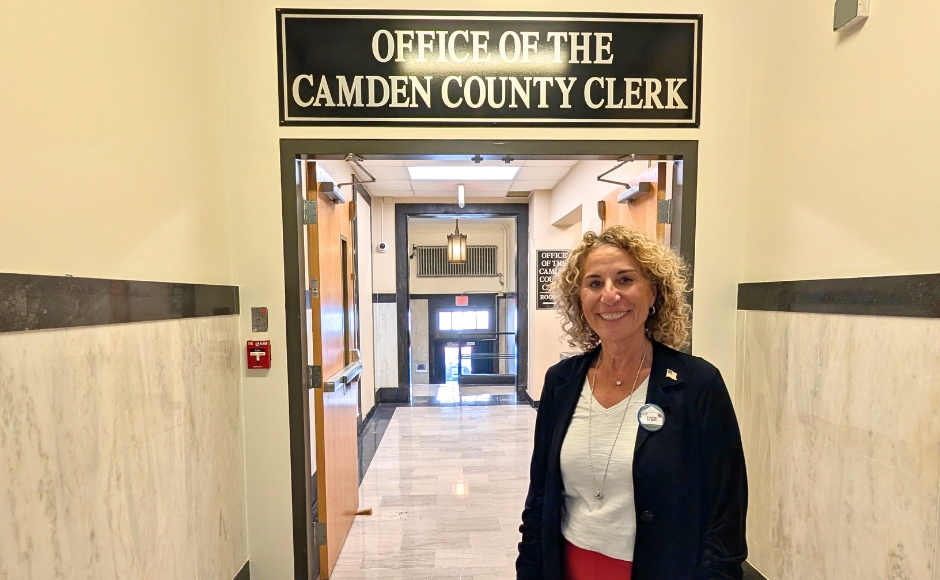
That amounts to more than a quarter of the 360,000 registered voters in the county, which is “on the level with what we would expect” for an election, Camden County Clerk Pamela Lampitt said Monday.
“Nothing has changed,” Lampitt said.
“Camden County has been doing this a long time.”
Heading into Election Day, the topic of voting by mail has become a national question because of Executive Order 14399, in which President Donald Trump directed the U.S. Postal Service (USPS) to create mechanisms to ensure that only U.S. citizens receive and cast ballots, “reducing the risk of fraud and protecting the integrity of Federal elections.”
USPS issued a final rule in late August whereby it could refuse to deliver outbound federal ballots that don’t conform to the new design standards, or which aren’t addressed to individuals on lists provided to the agency “for inclusion on the state’s Mail-In and Absentee Participation List.”
With the U.S. Supreme Court slated to take up the issue next, that rule has been stayed from taking effect for the 2026 General Election by two lower court rulings, the most recent of which was handed down Sunday in a memorandum opinion by U.S. District Judge Carl J. Nichols in the District of Columbia.
Nichols’ opinion upheld:
- that the burden of creating such voter lists and enforcing envelope design to meet the standard of the executive order is outside the limits of the authority of the postal service
- that attempting to establish and enforce such a system across the country so close to Election Day would likely disenfranchise legitimate voters
- that political candidates themselves could be harmed by the rule
- that election officials could be asked to bear additional costs if they were required to reprint and disseminate ballots they’d already paid to print and distribute
In weighing the balance of the issues, Nichols wrote that “absent an injunction, there is an increased risk that a significant number of otherwise appropriate absentee or mail-in ballots will ultimately not be counted in the upcoming elections.
“The public has a strong interest in ensuring that doesn’t happen,” he wrote.
“On the other side of the ledger, the Federal Government does not point to any record evidence that there will be significant fraud in the upcoming elections in the event the Court enters preliminary injunctive relief,” Nichols wrote.
‘We’ve done our due diligence’
Discussion on the ballot design issue had Lampitt “feeling like a ping-pong ball,” she said Monday — so much so, that her office waited to see whether the Gloucester County Clerk, which sent its vote-by-mail ballots out last week, encountered any issues.
“We could have dropped ours a little bit earlier, but we wanted to wait and see whether or not the households in Gloucester County actually received their ballots, and they did,” Lampitt said.
“Holding onto them a little longer just sort of protected them,” she said.
“At this point, we’ve done our due diligence with the post office, so this is not something that just happens.”
The clerk said that ballots sent to voters in Gloucester Township and Clementon for their special elections, September 12 and 15, respectively, have been delivered and returned without incident, which provided an additional reassurance prior to the General Election ballot mailings.
Camden County Deputy Clerk John Schmidt said that the clerks in all 21 New Jersey counties join a standing monthly call with the state Board of Elections and state, regional, and federal representatives from USPS, and are “in constant contact with the post office.”
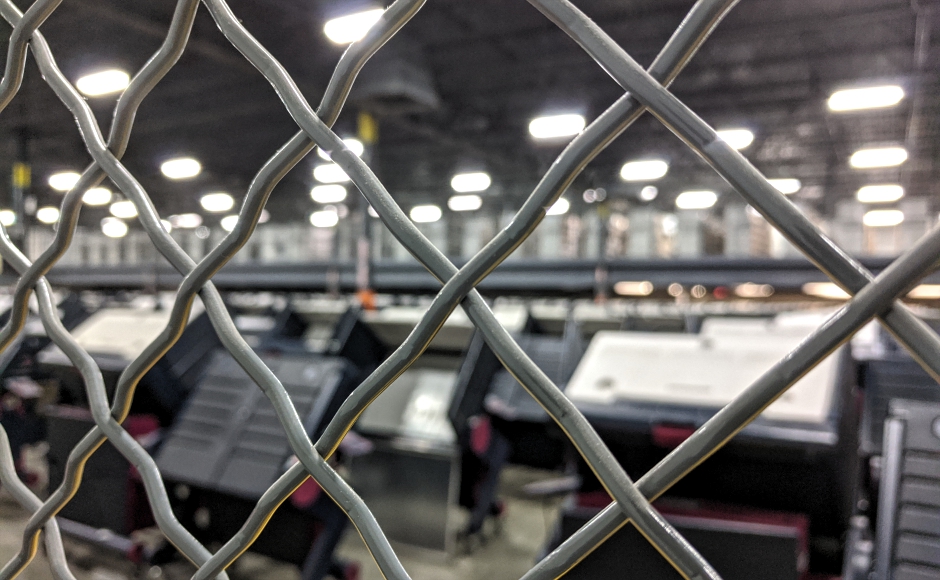
Lampitt said that Camden County voters who participate in elections by mail can be reassured that they’ll get a card indicating their ballots have been received.
Those who don’t want to remit their ballots via the USPS can alternatively deposit them in any of 29 secure drop boxes located across the county, she said.
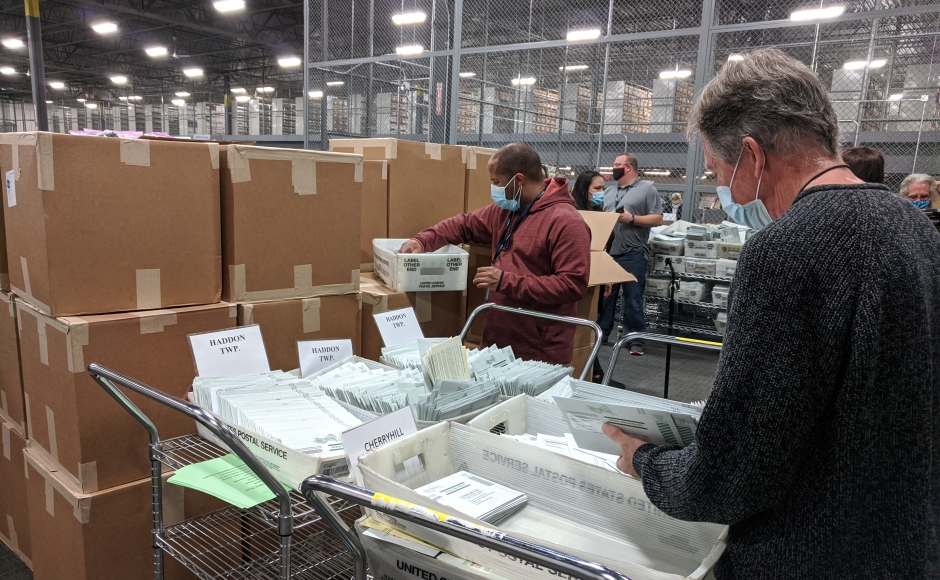
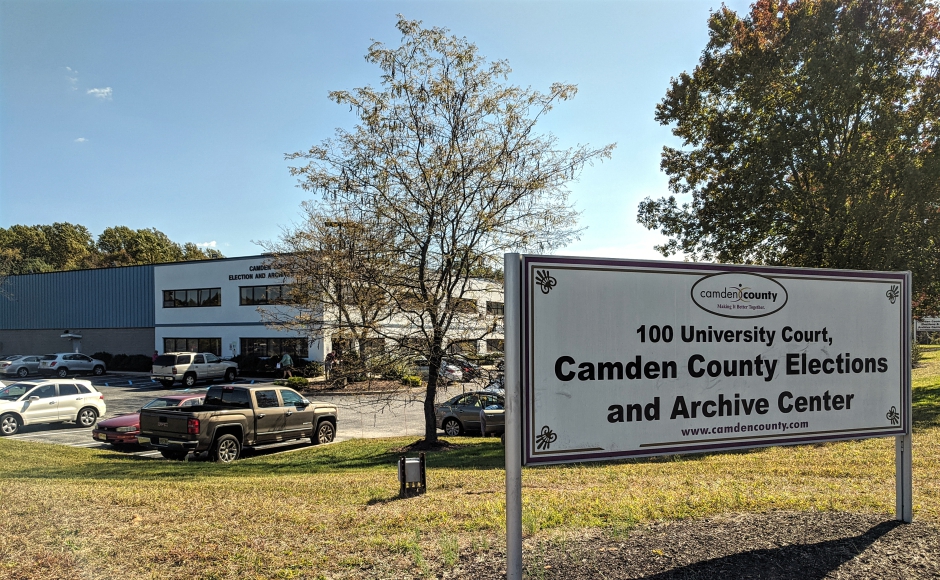
Schmidt also offered insight into the vote-by-mail process once ballots are received at the Camden County Board of Elections.
First, an electronic sorting device checks the name on the ballot against its database of vote-by-mail participants.
If there’s any discrepancy, the ballot is rejected.
The same device captures an image of the voter’s signature on the certificate in which the ballot has been sealed, and matches it against the known voter signature in the county database.
Teams comprising one Democratic and one Republican election worker compare those signatures as well, and any that don’t match are forwarded to the bipartisan election commissioners for a final review.
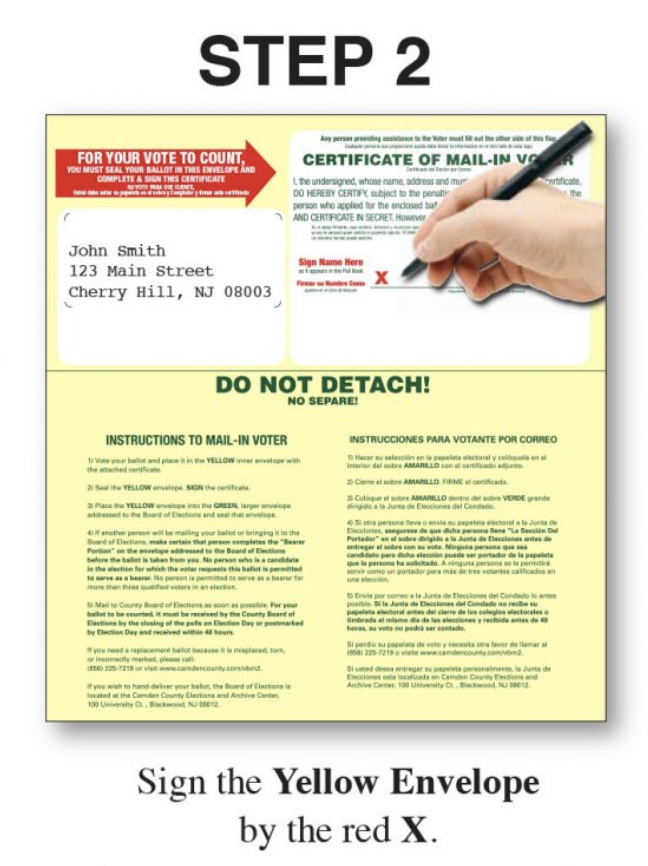
Just prior to Election Day, the same teams tear off the flaps to the envelopes containing the ballots in order to sort them by municipality, ward, and voting district, Schmidt said.
Five days before polls close, they can start running the vote tabulation; however, no reports are generated until the polls close at 8 p.m. on Election Day.
Any problem with a ballot results in a cure letter, which offers voters the opportunity to resolve any issues with their signature, envelope, certificate, or any other part of the process.
Voters have 48 hours to address those issues with the Board of Elections until the results are certified.
Although the system is the same for every election, the clerks well understand the additional scrutiny the federal executive orders and legal challenges to them has placed on their work this year.
“We treat every election with the utmost priority, but we do know that there’s going to be more attention on this election from the voters, from the media, from everybody else,” Schmidt said.
This report is provided for free to all readers in the public interest as part of NJ PEN election coverage.
To support our local, independent, community-based journalism, please become a subscriber.