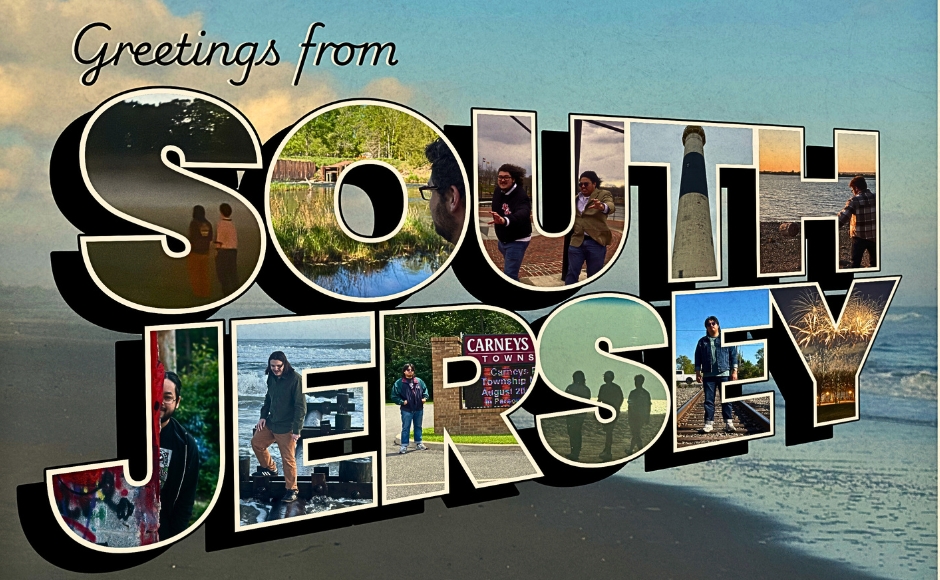
Defining the quintessential New Jersey experience is almost impossible.
A state that’s geographically one of the smallest as well as the most densely populated, it’s full of inherent contradiction and wondrous diversity.
Artists have tried to capture its essence in song before, from Bruce Springsteen and Tom Waits to John Gorka and Fountains of Wayne.
The latest to take a shot at the subject matter, 25-year-old Earth Kenan Salazar of Deptford, might be the first to do so as a Yacht Rock enthusiast.
Salazar was born in Manila, Philippines, grew up in Northeast Philadelphia, and moved across the Delaware River to Gloucester County a few years ago.
Schooled at Berklee College of Music in Boston, he completed a four-year program in three years (2019-2022) divided by the COVID-19 pandemic. The impact of both appears in his work, which fuses 70’s studio sensibilities and Gen-Z Internet slang.
Moreover, Berklee helped Salazar hone his technical proficiency. As a young guitarist, he had been captivated by the “excessiveness” of thrash metal players, but as his tastes matured, Salazar began to value restraint as much as intensity.
“The speed shows where your peak is, but what about the effortless stuff?” he said. “Even if you can play fast, can you play it super-precisely, and well, and stay in the pocket?”
Yacht Rock and Japanese city pop drove Salazar’s own compositions from shred metal to prog rock before the band Vulfpeck “knocked me off my metal horse,” and COVID jazz studies pushed him all the way around the bend.
He started posting “Gyatt Rock” — Steely Dan covers with Gen Alpha “brain-rot” replacement lyrics — to his social media channels, a curiosity of which Rolling Stone took notice in 2024.
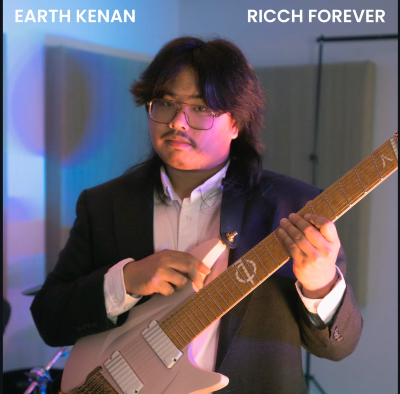
Salazar had lassoed an unlikely algorithmic audience: young people following novelty trends, and their parents, confused upon hearing familiar songs covered with lyrics they barely understood.
Exploiting the juxtaposition seemed to be the funniest thing for him to do.
“[People would say] ‘This is so niche, who is this for?’” Salazar said.
“The algorithm served that to you, so it’s you” he said.
“Folks in their 40s and 50s who have kids that are saying these interesting words ended up being the most common target demographic.”
After the success of “Gyatt Rock,” Salazar thought about evolving to meet an audience that seemed willing to follow him. He challenged himself to write a song for each of the 21 counties in New Jersey.
Quietly, he also resolved to produce them in a Yacht Rock style.
Yacht Roots
For a term that’s shown remarkable staying power in the past 20 years, the critical definition of Yacht Rock is narrowly understood in comparison to its popular usage.
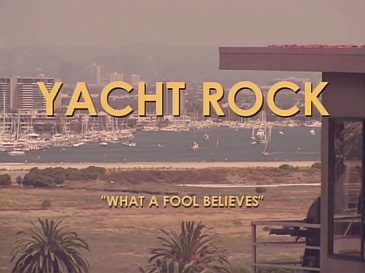
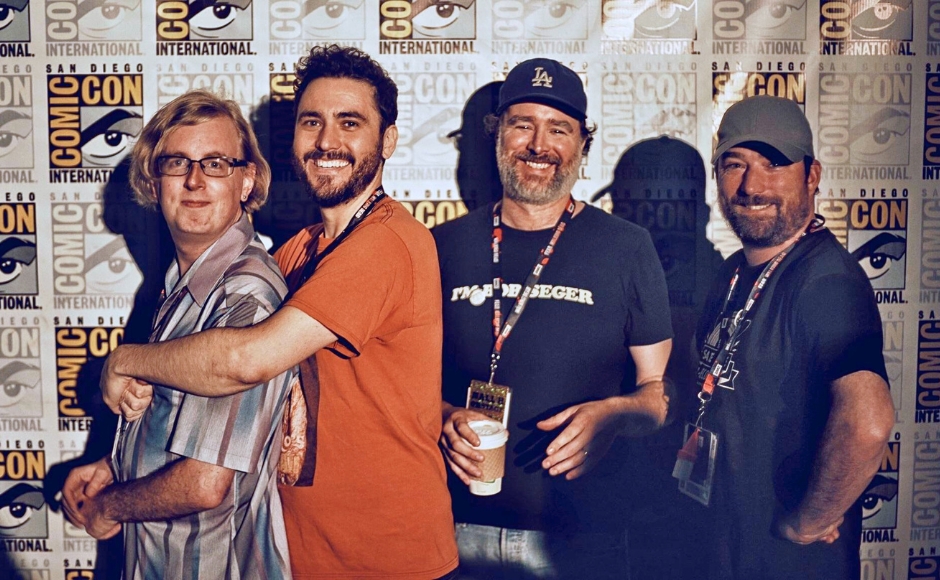
It was coined as the title of a 12-episode comedy web series produced by four Michiganders who became Angelenos in the early 2000s to pursue careers in entertainment.
Through the Channel 101 monthly film festival, “Hollywood” Steve Huey, David Lyons, J.D. Ryznar, and Hunter Stair found common cause with a wave of performers who couldn’t get any traction in the L.A. comedy scene.
Founded by TV writers Dan Harmon and Rob Schrab, who went on to create Community and Rick and Morty, Channel 101 showcased young talents like Jack Black, The Lonely Island, and Tim Heidecker and Eric Wareheim.
Huey, Lyons, Ryznar, and Stair got the idea for Yacht Rock while poring over the dollar bins at their local record shops.
The four began to imagine a narrative framework connecting the personnel on those albums, and cooked up stories of their players’ rise to radio glory.
They hung those tales on a Behind the Music-style mockumentary framework, with Huey as their scholarly host presenter.
Ryznar and Stair starred as frenemies Michael McDonald and Kenny Loggins, while Lyons played Koko Goldstein, their manager and spiritual champion of the “really smooth music” they were chasing.
The project wasn’t called Yacht Rock for any maritime-themed subject matter, but because the musical backstories it purported to tell were of songs that conjured the sensation of gliding along in open water.
Some nautical imagery was baked into the concept: Goldstein’s marina boathouse serves as the setting for the decadent dock parties where Loggins and McDonald perform alongside Steely Dan, The Doobie Brothers, and Captain & Tennille. But Yacht Rock was really about the power of smooth music to transcend any challenge.
Eventually, the concept of Yacht Rock outstripped its run as a comedy series, and took on a critical taxonomy that Huey, Lyons, Ryznar, and Stair began to evaluate more seriously in subsequent media. In the 20 years since Yacht Rock (the series) debuted, Yacht Rock (the genre) has been debated, dismissed, derailed, and deconstructed by personalities peripheral to the recording industry.
It’s helped rekindle interest in the once-dormant careers of the original artists who recorded it. It’s led to turf wars over what does and doesn’t belong “on the boat,” the quartet’s shorthand for songs that meet their definition of the term.
And for musicians who didn’t grow up in the era when its biggest hits dominated the U.S. airwaves, Yacht Rock has created a treasure hunt for the foundations of a sound that fell out of fashion 40 years ago.
A working definition
Ryznar defines Yacht Rock as smooth pop rock that incorporates elements of jazz and R&B, and which was mostly recorded by ace L.A. session players from around 1976 to 1984.
It’s distinct from the Laurel Canyon singer-songwriter folk and psychedelia that preceded it. Among its contemporaries, it’s more rhythmically complex than disco, and less anthemic than arena rock.
It’s not as melodically predictable as sentimental soft pop. And rather than being driven by a specific set of artists or acts, Yacht Rock mostly reflects the commercial vision of a handful of producers who shaped its sound.
“Look at the guys who are on A&R for Warner Brothers around the time that Yacht Rock exploded,” Ryznar said.
“It was Michael Omartian, who produced Christopher Cross; it was Ted Templeman, who produced The Doobie Brothers. It was Tommy LiPuma, who turned George Benson into a pop star; it was Gary Katz, Steely Dan’s producer.
“These were all the guys making decisions on the Warner Brothers board as to who to sign and who to record, and they would go out and record them,” Ryznar said.
“With that brain trust, and the musicians, and the names, and the bands themselves who were well-steeped in jazz and R&B, and wanted to do that — all these elements kind of came together and created something that was just a little bit different and more elevated than the rest of the stuff on the radio.”
Huey describes Yacht Rock as “music of the Steely Dan family tree,” because many of the Steely Dan session players lent those sensibilities to their own projects, “ironed out some of the Steely Dan quirks for a wider pop radio consumption, and brought this more sophisticated and racially mixed sound to adult contemporary radio at the same time.”
“It’s a lot of white guys, but they’re performing in a historically Black musical style,” Huey said. “A lot of the same players [appeared] on these R & B records once they were discovered by guys like Quincy Jones and Maurice White.
“There’s a real acceptance that, ‘Hey, these guys can play; we want them on our records too.’”

Whether smooth rock is poorly defined in the broader pop music canon, or the term is “ambiguous enough that people can project their own meaning onto it before they learn what it really is,” as Huey says, Yacht Rock invites the kinds of debates typically reserved for record store counters.
On their weekly “Yacht or Nyacht” podcast, Huey, Lyons, Ryznar, and Stair review listener-submitted songs on a 100-point scale. Fans archive their scores on yachtornyacht.com.
Anything rated 50 or better is canonically Yacht Rock. The scale peaks with a perfect score of 100 for “What a Fool Believes,” the platonic ideal of the genre before legions of lesser aspirants.
“I’m proud of the work we do, and the Yachtski scale, because you’ve got one place to go, if you’re digging that vibe, to find so much more,” Ryznar said. “If you want to know what it is — like, if you want to take the red pill of Yacht Rock — come join us.
“Otherwise… enjoy another Eagles song; enjoy another Rupert Holmes song,” he said.
“We’re over here, listening to George Benson and Al Jarreau, and going ‘Yes! Yes!’, high-fiving each other, and having a great time.”
Juxtaposition and authenticity
Identifying Yacht Rock songs among oceans of previously released music means working backwards from the concept of the term, and finding recordings that could be said to match its definition based on players, date of issue, and instrumentation.
Writing new music that might prove a spiritual successor to period-appropriate Yacht Rock is more difficult.
Salazar describes his philosophy of music as being rooted in authenticity, and himself as a fundamentally silly person. He isn’t shy about calling his singing delivery “stilted,” his videos “high-effort shitposting,” and preferring the uncertain career of a content creator to that of a classical performer.
“Carrying all this musical knowledge that I have, this experience, I can’t imagine myself just wearing a bowtie and black tuxedo, sitting in the Kimmel Center with a violin,” he said. “It’s so self-aggrandizing. I think I’d rather be awesome and a fool at the same time.”
How well does Salazar understand Yacht Rock? He’s never formalized his thoughts, but described it as “a gradient,” “an approach,” “an ethos,” and “not a set of rules.”
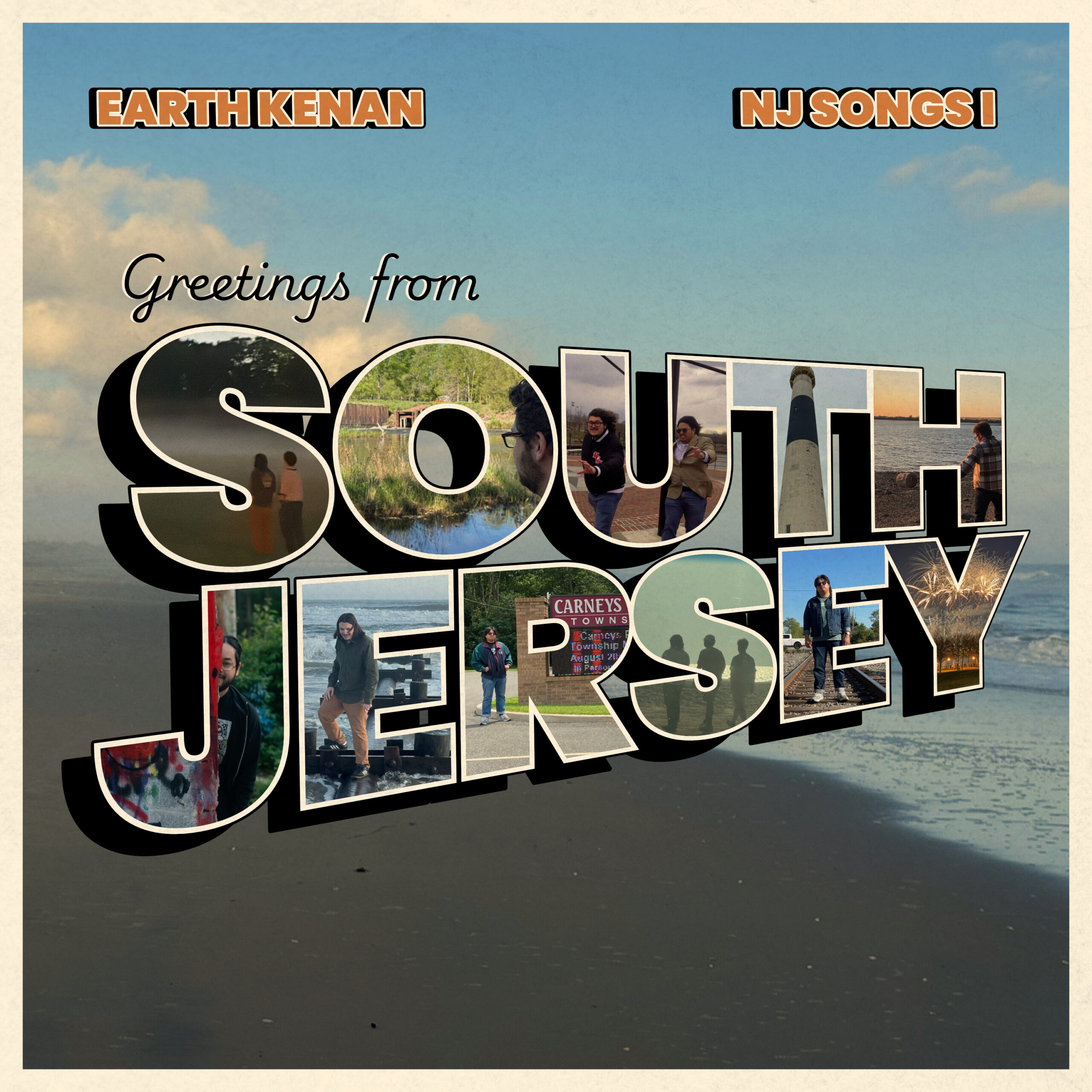
With NJ Songs I: Greetings from South Jersey, Salazar surely is trying to deliver a Yacht-Rock-influenced album, or at least a few songs that fit the definition outright.
Tracks that don’t quite meet the standard could nonetheless reach the desks of county boards of tourism (some, like “Atlantic County,” were commissioned by them).
He’s tried to give each its own “sonic signature,” with lyrics that start by following the melody phonetically, and then shoehorning in funny place names.
As a South Jersey transplant, Salazar has brought an outsider’s detached curiosity to the project.
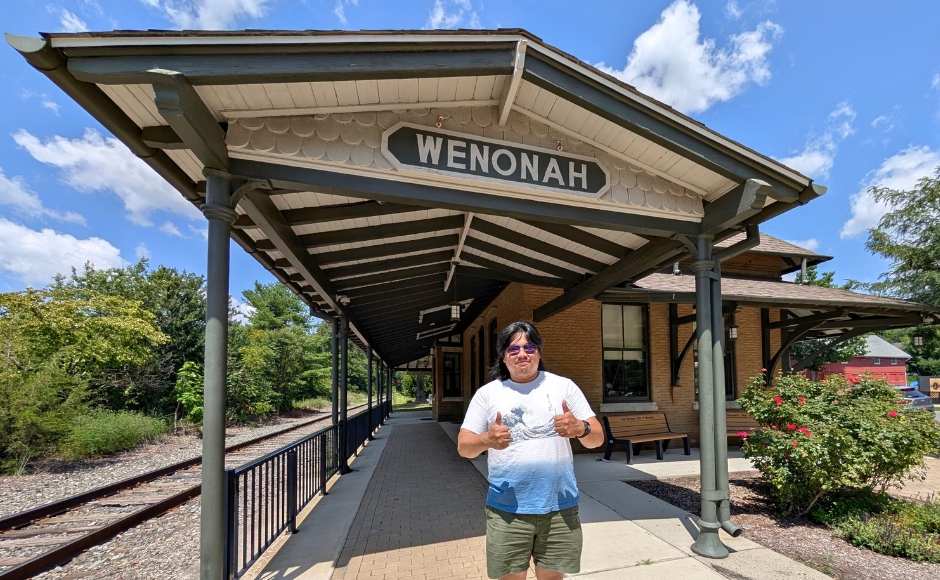
Filtering his exploration of New Jersey through Yacht Rock and footage of himself standing awkwardly in front of local buildings seemed the best way to express the lack of a uniform cultural experience in the Garden State.
“It seemed more natural to keep that juxtaposition, and talk about civics and silliness, and set that against the background of smooth music and good vibes,” Salazar said.
“In the event that somebody tunes out of what I’m saying and into the music, they’ve got a little treat.”
Is it Yacht or Nyacht?
Although “Yacht or Nyacht” hasn’t graded NJ Songs I: Greetings from South Jersey, Huey, a former critic at AllMusic, said Salazar is “doing his homework, and he’s getting straight A’s.”
“When these younger musicians are trying to do that stuff, it’s very difficult,” he said. “This is very challenging. I’m not surprised that it’s taken a Berkelee guy like Kenan Salazar to try and replicate this stuff accurately, because it’s very difficult.
“This is really sophisticated music, and you don’t realize it until you’ve listened to it or tried to play it enough that it sinks in: ‘Oh, wait a minute. Nothing else really sounds like this.’”
In Greetings from South Jersey,” Huey said he hears “a lot of what it would sound like if Steely Dan tried to write advertising jingles,” which he appreciated not only for the irony of the concept, but for Salazar advancing the plot.
“It makes [Yacht Rock] feel like a genre to me if people have embraced the specificity of it to a degree where they’re now doing their own take on it,” Huey said. “That’s great.
“They’re taking something people loved about it in the first place and embracing it and amplifying it, you know? Keeping the fire.”
To Ryznar, Salazar’s formal musical training and sharp-eared production fidelity give some of the most “yachty” tracks on Greetings from South Jersey their bona fides.
“I think it’s the fact that he’s looking at a song, breaking it down, rearranging it based on principles of jazz and R&B, and focusing on the musicianship rather than how cool it sounds, or how much of a hit it’s going to be,” Ryznar said.
The Yacht or Nyacht podcast has scored Salazar’s Yacht Rock rearrangements of “Teenage Dirtbag” by Wheatus and “Good Luck, Babe!” by Chapel Roan — and in those discussions, remarked on his understanding of core Yacht Rock elements in those distillations.
“You listen to [“Good Luck, Babe!”] on its own, and you’re like, ‘This could never be a Yacht Rock song,’” Ryznar said, “but it goes to show you that it’s all in the arrangement and the musicianship. You can approach anything as a Yacht Rock song.”
What’s next
Whether or not Greetings from South Jersey becomes yacht-certified, Salazar said he feels validated by the crew’s acknowledgment of his efforts to update the original sound of the era for contemporary appreciation.
“Regardless of how they feel about it, just the fact that I’m being recognized as somebody who’s in that space, or trying to make waves there, is very validating and very encouraging for what I’m doing,” Salazar said.
“I’m not just putting on a mask of Yacht Rock and pretending to be anybody,” he said. “As somebody who’s been to jazz school and run in jazz circles, that’s the last thing I want to do.”
Even if his work is delivered with a heap of lyrical sarcasm set against meticulously researched production elements, Salazar draws a clear line between the silliness of his messaging and the seriousness of its medium.
“The irony should be in what I’m saying and not how I’m saying it, because the vehicle in which it’s presented is very important to me, and the medium itself is never the joke,” he said.
“Authenticity, and the work you’re putting in to be able to hang, or not be seen as a culture vulture, is very important in music right now,” Salazar said.
“I think about Yacht Rock as a tradition that I want to respect and participate in with integrity — even moreso if you’re trying to be silly.”
Now that NJ Songs I is completed, Salazar is both happy to anticipate the next leg of his journey, and anxious about the amount of work it will entail. Central Jersey, itself a quasi-mythical place, is less familiar to him, but he’s approaching it with the same attention to detail and tongue-in-cheek aesthetic he brought to South Jersey.
“Ocean County,” the first of the next batch of songs, includes footage captured at seaside resort towns in the middle of winter. Salazar plans to release a new track every month along with his other recording and producing projects, like his post-hardcore band, Palinoia.
As much as NJ Songs serves as “an excuse to explore my adopted state,” Salazar views the project as microcosmic of the American story itself; a mileage-may-vary recollection of the places where an attendant is required to pump your gas.
“We have everything in the essential American experience,” he said. “We have mountains, we have beaches, we have farmland, we have nowhere. I just want to push that into the light and say, ‘This place doesn’t suck, actually.’
“I’ll always claim Philly as heritage for sure, because that is where I’m from, but in terms of quality of life and wanting to be somewhere, Jersey’s where it’s at.”
For more, you can stream the entirety of NJ Songs I: Greetings from South Jersey on YouTube, or listen to the album on Spotify.