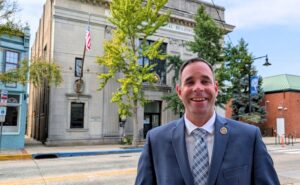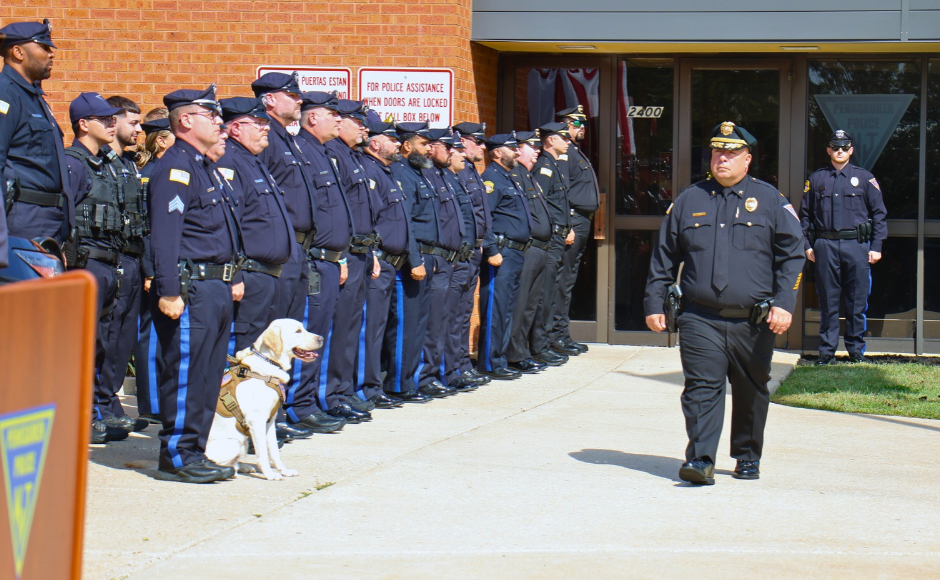
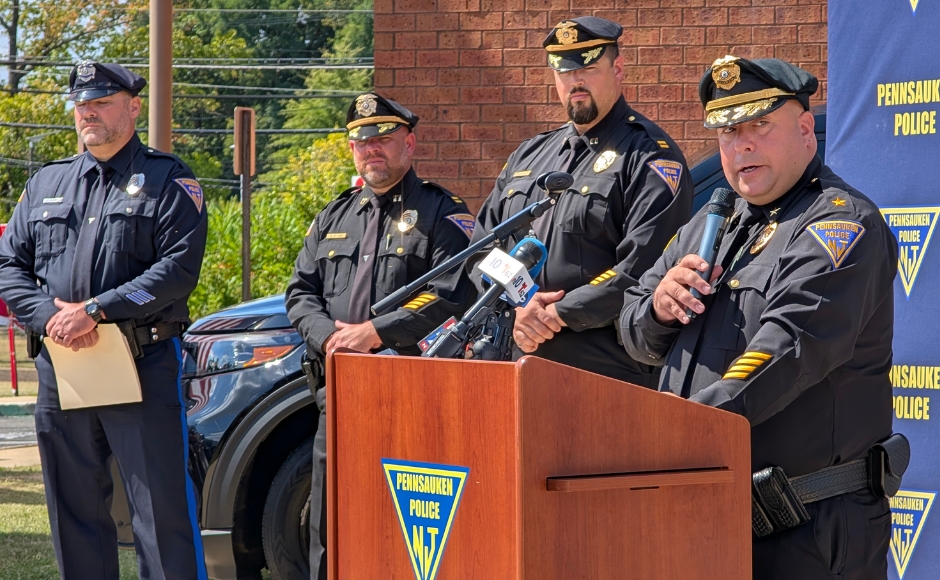
This month, Pennsauken Police Chief Phil Olivo announced his retirement from the department after 25 years.
Olivo, who’d envisioned becoming a police officer since childhood, spent the entirety of his law enforcement career with Pennsauken, save for three months in the state Department of Corrections.
In June 2001, he transferred to Pennsauken as a new recruit, and began patrolling the Westfield Avenue commercial corridor on a bicycle, down to Federal Street in Camden City.
In the eight years Olivo spent as a patrolman, he most remembers the moments where he made an impact on street-level crime. Once, after helping to halt a group of teens assaulting an elderly person, he was thanked by the victim’s family after an appearance in court.
“The whole family was hugging us,” Olivo said. “They said, ‘They were going to kill our dad.’”
He felt the same sense of purpose when he made detective in 2009, and began investigating major crime scenes, developing suspects, and gathering the evidence required to arrest and prosecute them.
After five years in the unit, Olivo was promoted to detective sergeant; four years later, in 2018, he made lieutenant.
In his lieutenancy, Olivo was tasked with overseeing both the detective and internal affairs units for the department. Those responsibilities carried over with him when he made department captain in 2020.
During his time in internal affairs, Olivo saw how officer bodycams and vehicle dashboard cameras helped “find our weaknesses and where [the department] could be improved” through tight integration with the training unit coordinator.
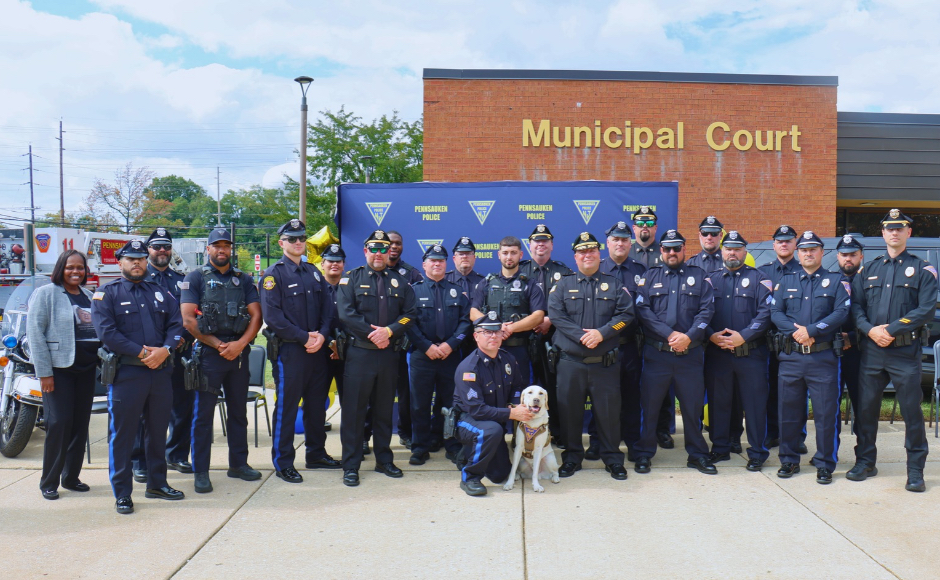
“We made ourselves better through training,” he said. “It gave us an eye into what was really happening, and I knew how things operated when I became chief.”
In 2021, Olivo was named Officer in Charge of Pennsauken Police, and from there, became full-time chief of the department.
At each rank, “you only understand what’s around you and what you’re exposed to,” Olivo said. By the time he became chief, he’d served in every unit except traffic and K9, and grasped not only how each operated but how to delegate oversight of them.
Despite his familiarity with those roles, “nobody understands the job until you’re in the seat,” he said.
“If something goes wrong, it’s coming back to you,” Olivo said. “You can’t hold grudges, you have to be fair and balanced, and you have to be available. It never stops.”

The role of chief also requires a forward-thinking perspective.
In preparation for his retirement, Olivo readied two captains to succeed him, fostering their autonomy in budget development, communication, and maintaining community relationships.
“I always tried to find our blind spots and make ourselves better,” Olivo said.
“All of our officers, everything they did, I couldn’t have been successful without them backing me.”
In building those broader public relationships, Olivo also cited the robustness of the Pennsauken town watch, whose ranks often overflowed its meeting room during his tenure as chief.
Additional community policing efforts like the township Christmas parade, trunk-or-treat events, and National Night Out celebrations helped to solidify the relationships between officers and those residents who keep an eye on their neighborhoods.
“They’re volunteering, and they really care about the community,” Olivo said.
During his tenure as chief, the township and department further enhanced partnerships with law enforcement agencies at the county, state, and federal levels of government, which Olivo said acted as a force multiplier for tracking down fugitives, making arrests, and supporting local policing initiatives.
One of the most significant moments underscoring how successfully those inter-agency relationships had flourished occurred in 2024, when the township Summer Kick-Off event was shut down by an influx of disruptive teens.

In concert with county emergency management crews, Pennsauken Police called in 96 officers from surrounding departments to help manage a rapidly spiraling incident without injury.
That same planning approach has helped officials anticipate and defuse similar concerns.
“If we had wind [of something], we’d change the way we do things,” he said.
“Whenever there was a sniff of something going on, [like] a car meet-up in a parking lot, we’d go talk to the owners, [and] put manpower out there.
“Unsanctioned events at apartment complexes, we get with management ahead of it,” Olivo said; “put out flyers reinforcing the rules, assign people out to that location.
“I believe it’s easier to address it before it happens,” he said; “having a plan and being in front of it.”
When Olivo considers the challenges the next chief will face in light of the policing needs of the township, he describes issues like domestic violence, vehicle thefts, highway and traffic safety, and illegal drugs.
Part of the challenges to policing Pennsauken involve its division by major highways, which allowed for suspects to flee quickly in the early 2000s, when the region was plagued by a rash of gas station robberies.

However, Olivo believes in the abilities of Officer in Charge Michael Killion, who will handle the role of chief until the township committee formally appoints its next police chief in January.
Like Olivo, Killion is a 25-year department veteran, and served under the outgoing chief as a department captain.
In identifying the next township police chief, “we want someone who’s well-rounded, and has been in different departments,” Pennsauken Committeeperson Jessica Rafeh said.
“Phil has left big shoes to fill,” Rafeh said.
“We’re aiming towards picking someone who has those qualities and who can fill those shoes.”
Rafeh was the committee liaison to the township Department of Public Safety when Olivo was sworn in as chief, and is serving in the same role as he’s retiring. She acknowledged the “full-circle moment” in crediting Olivo with having strengthened the relationship between the local police and municipal government during his tenure.
“He was all-in, and I’m extremely proud,” Rafeh said.
“Government is difficult. To build that relationship with council, bridge that gap, I think we did a good job all these years because we both had the same idea. What services can we provide that we’re not providing? How can we get it better?”

Olivo credited Rafeh and her colleagues with giving him the opportunity to make the case for his policy initiatives, and then giving him the resources to deliver on them.
“We were able to bring it in where we are like a team,” he said.
“The stuff we were able to accomplish was exponentially [beyond what we could achieve] then if we were trying to do it ourselves.”
In retirement, Olivo said he is most excited to spend the time that he had dedicated to his law enforcement career with family and loved ones.
In addition to regular exercise, he’s picking up some deejay gigs, looking forward to traveling, and “just trying to enjoy life.”
“I’m trying to reconnect,” he said; “putting attention to where my life’s been neglected.”